Welcome to the beginning of my Wicked Soundtrack analysis! I’ve been obsessed with listening to the original cast album, the movie soundtrack, and the score (John Powell by the way). Since it would be too long to read for a single post, I’ll probably post these every day or couple days with a different song/score each day. For those not so musically inclined, I’ve also put some excerpts so you can hear what I’m talking about.
SPOILER WARNING! If you haven’t seen the movie or the musical and don’t want to see any spoilers, this is not the post for you! I will be talking about a lot of the details in the soundtrack, including how it relates to the story.
My goal is to give a little insight into how I listen to music, and hopefully, give you a little bit more to think about next time you listen to a musical soundtrack or movie score. It’s probably easiest for me to go chronologically through both the soundtrack (the songs) and the score (the background music), though there may be some overlap.
No One Mourns the Wicked
Not gonna lie, I teared up a bit when I heard the first opening chords of the musical, but this time with a symphony orchestra. John Powell, you’ve done it again.
I was honestly surprised by how much this follows the musical soundtrack. There are a few changes here and there, but it’s really, really similar. Here, we get introduced to almost every theme that the movie uses, starting with:
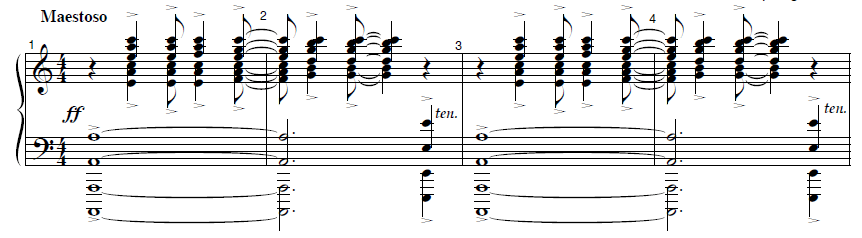
To avoid confusion, I’ll call it No One Mourns the Wicked Theme A (creative, I know, right?) This succession of chords shows up throughout the entire musical, but there’s not much to talk about right now. It’ll show up in later songs.
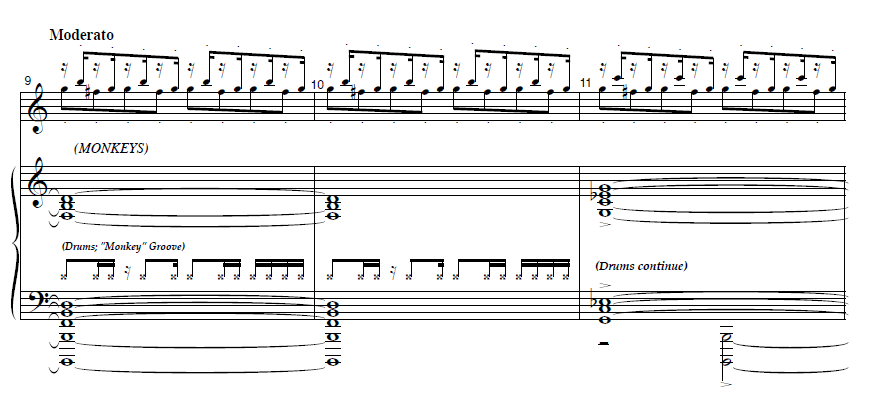
Next, comes the Monkey Theme, which, like the name suggests, symbolizes the kind of hectic and crazy movement of the monkeys which will become Elphaba’s flying monkeys. This theme shows up whenever, well, there are monkeys.
Next comes one of my favorite themes of the musical: the Unlimited Theme. There are actually two themes in one here: the succession of notes you can hear at the beginning and the actual melody of “Un-li-mi-ted” that Elphaba sings in “The Wizard and I.”

These two themes are used a lot throughout the soundtrack, and for good reason. The “Unlimited” themes represent just that: unlimited possibilities. But underneath those magical sounds, the themes represent the hope and naivety that Elphaba has toward the world at the beginning of her journey. Here is that part of “The Wizard and I” in the original soundtrack.
Arrival at Shiz University
Arrival at Shiz University underlies the title sequence, and it has this magical exposition and samples a couple of themes. I’m just going to put the full opening sequence through the title card because it’s that good. Listen to it! SOO good!! John Powell, you sure know how to make an entrance (looking at you, HTTYD).
There are two themes in this: “For Good” Theme A and “Unlimited” Theme B. It starts with a solo oboe playing the theme from the beginning of “For Good,” which repeats a couple of times, swelling up to the “Unlimited” theme played by the deeper and more majestic cellos and horns. Here is the beginning of “For Good” for reference:
The “For Good” themes are used throughout the musical and the movie to represent the friendship between Glinda (or I guess at this point, Galinda) and Elphaba. It will appear a lot throughout this analysis, so it helps to hear those four notes and hold onto them. They’re extremely simple, just the notes outlining a Db major chord, but I can’t get over how right it sounds for these two girls. If you also noticed in the music below, you’ll see the second theme, Theme B, of “For Good,” those descending major 7th chords – I’ll get into those in a later post.
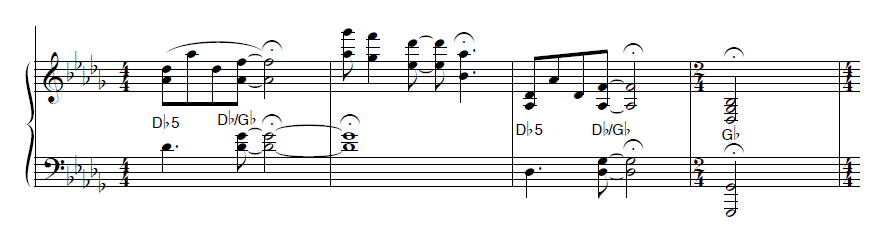
And that’s it for this first post! The rest of “Arrival at Shiz University” is backing to the exposition of the school, which will be the next post.
 Inside my mind: A blog by Michael Imai
Leave a comment